
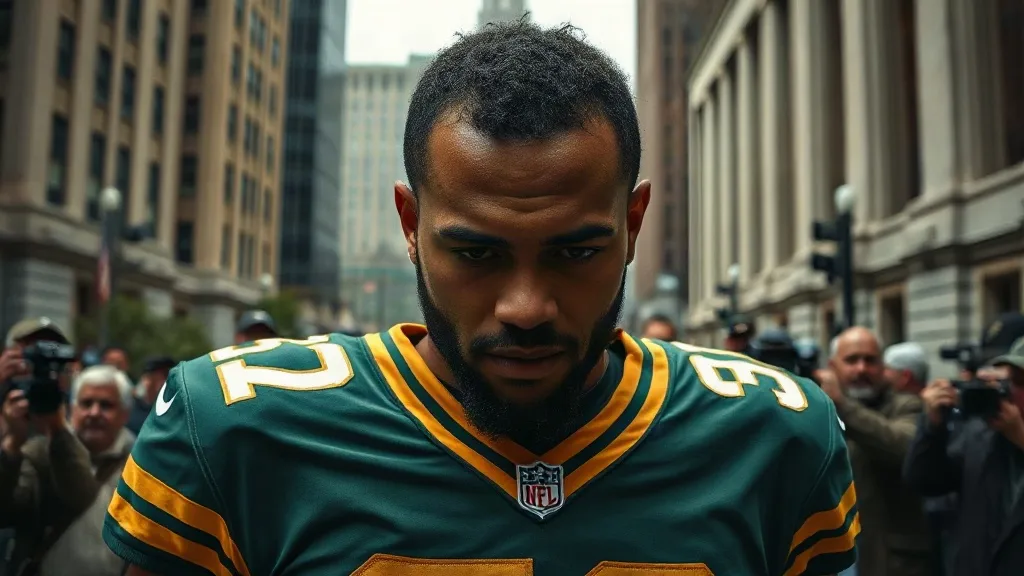
Green Bay Packers running back Josh Jacobs has taken legal action to keep details of a May incident under wraps. According to court filings, Jacobs has filed a civil suit seeking a permanent injunction that would restrict access to records and video stemming from an altercation with a woman on May 23. The move marks a significant escalation in a case that has largely flown under the radar until now, and it raises questions about privacy, public interest, and the legal tools available to high-profile figures.
What We Know About the Incident
The altercation occurred on May 23, but few specifics have emerged. What is clear is that Jacobs, a former All-Pro running back who joined the Packers in 2024, is proactively seeking to prevent the dissemination of records related to the event. The lawsuit, filed in civil court, requests a permanent injunction, which if granted would legally bar the release of any documentation or footage. This is not a criminal case, at least not yet; it is a civil action aimed at controlling the flow of information.
While the exact nature of the altercation remains unclear, the fact that Jacobs is pursuing such a legal remedy suggests that the records in question could be damaging to his reputation or personal life. Permanent injunctions are not granted lightly; courts typically require a strong showing of irreparable harm and a lack of adequate remedy at law. Jacobs' legal team must argue that without the injunction, he would suffer harm that cannot be undone, such as privacy violations or reputational damage.
Why This Legal Move Matters
For public figures, the battle over information is often as intense as any on-field competition. Jacobs' decision to sue highlights a growing trend among celebrities and athletes to use civil courts to shield personal matters from public view. In the age of viral content, a single video can circulate globally within minutes, causing irreversible damage. By seeking a permanent injunction, Jacobs is attempting to get ahead of that possibility.
However, such legal maneuvers are not without controversy. Critics argue that they can be used to suppress legitimate public interest, especially when the individual involved is a prominent athlete. Supporters counter that even public figures deserve a measure of privacy, particularly when no criminal charges have been filed. The outcome of this case could set a precedent for how similar situations are handled in the future.
The Legal Standard for Injunctions
To secure a permanent injunction, Jacobs must convince the court that he will suffer irreparable harm if the records are released, that monetary damages would be insufficient, and that the balance of hardships tips in his favor. He must also show that the injunction would not disserve the public interest. These are high hurdles, and courts are often reluctant to restrain speech or access to information without compelling reasons.
In many jurisdictions, there is a strong presumption in favor of public access to court records and government documents. However, when the records involve private individuals and sensitive personal matters, that presumption can be overcome. Jacobs' status as a public figure cuts both ways: it may increase public interest in the records, but it also means he has a legitimate interest in protecting his family and personal life from undue scrutiny.
Potential Impact on Jacobs' Career
From a career standpoint, the lawsuit adds another layer of distraction for Jacobs, who is coming off a strong season with the Packers. On the field, he has been a key contributor, but off the field, legal troubles can affect a player's focus, team dynamics, and public perception. Sponsors and teams often monitor such situations closely, and an adverse outcome could have financial implications.
That said, filing a lawsuit is not an admission of guilt. It is a legal strategy, and Jacobs is entitled to pursue it. The Packers organization has not commented publicly, and it is unclear whether the team is aware of the specifics. For now, Jacobs remains a member of the team, and there is no indication that his status is in jeopardy.
The Broader Conversation: Privacy vs. Public Interest
This case touches on a debate that has intensified in recent years: where should the line be drawn between an individual's right to privacy and the public's right to know? Athletes, like other celebrities, often find themselves navigating this gray area. Social media and digital platforms have made it easier than ever to distribute information, but they have also made it harder to contain it.
Jacobs' lawsuit is a reminder that legal avenues exist to protect privacy, but they are not foolproof. Even if an injunction is granted, information may already have leaked or be available through other channels. Moreover, the legal process itself can draw more attention to the very matter one seeks to keep quiet. It is a double-edged sword.
What Happens Next?
The case will proceed through the civil court system, where both sides will present arguments. Jacobs' legal team will need to provide evidence of the potential harm, while opposing parties, which could include media organizations or individuals seeking the records, will argue for access. The judge will then decide whether to grant the permanent injunction.
There is no set timeline for a ruling, but such cases can take months or even years to resolve. In the meantime, Jacobs will continue his offseason training and preparation for the upcoming NFL season. How this legal battle unfolds could have ramifications beyond his personal situation, influencing how similar cases are handled in the future.
Frequently Asked Questions
What exactly is Josh Jacobs suing to block?
Jacobs is seeking a permanent injunction to prevent the release of records and video related to an altercation with a woman that occurred on May 23. The exact contents of those records have not been made public.
Why would a court grant a permanent injunction in a case like this?
A court may grant a permanent injunction if it finds that releasing the records would cause irreparable harm to Jacobs, that money cannot compensate for that harm, and that the public interest favors keeping the records private. The bar is high, and such injunctions are not routinely granted.
Could this lawsuit affect Josh Jacobs' NFL career?
It is possible. Legal distractions can impact a player's focus and public image, and teams and sponsors may monitor the situation. However, filing a lawsuit is not an admission of wrongdoing, and Jacobs' status with the Packers remains unchanged for now.
What happens if the injunction is denied?
If the injunction is denied, the records and video could be released to the public or to specific parties, depending on the court's ruling. Jacobs could appeal the decision, but that would prolong the legal process.
Is this a criminal case?
No, this is a civil lawsuit. There have been no reports of criminal charges being filed in connection with the May 23 incident. The civil suit is solely about restricting access to records.