
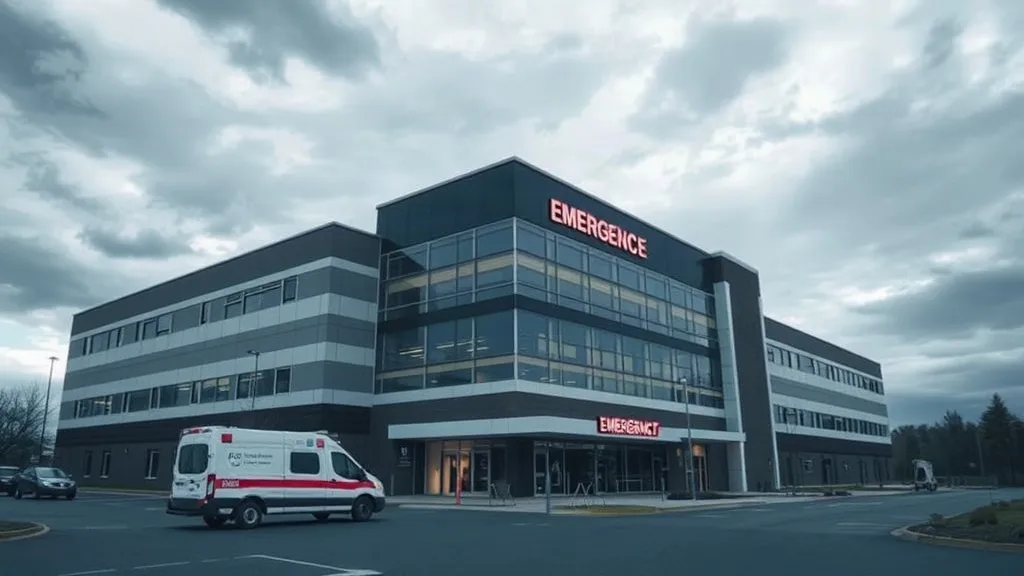
In a candid admission that has reignited debate over Northern Ireland's ailing health infrastructure, Health Minister Robbie Butler has stated that there is simply no money available to build a new emergency department at Altnagelvin Hospital in Derry. The minister acknowledged that such a facility is a priority, but the stark reality of budget constraints means the project cannot proceed for now. The announcement has left many in the region questioning how the hospital will cope with growing demand and deteriorating conditions.
The State of Emergency Care at Altnagelvin
Altnagelvin Area Hospital serves as the primary acute hospital for the north-west of Northern Ireland, covering Derry, Limavady, Strabane, and parts of County Tyrone. Its emergency department is one of the busiest in the region, handling tens of thousands of attendances each year. However, the facility has long been criticised for being outdated and overcrowded. Patients often face lengthy waits, and staff work under immense pressure to deliver care in cramped, poorly designed spaces.
The call for a new emergency department is not new. Clinicians and local politicians have been advocating for an upgrade for years, arguing that the current infrastructure is no longer fit for purpose. The COVID-19 pandemic further exposed the vulnerabilities of the hospital's emergency care, with infection control measures highlighting the need for more spacious and modern facilities. Yet, despite widespread recognition of the problem, progress has been slow.
Minister's Admission: A Priority Without Funding
Minister Butler's comments came during a recent discussion on health service funding. He was unequivocal: a new emergency department at Altnagelvin is a priority, but the money is not there. This admission underscores the broader financial crisis facing Northern Ireland's health service, which has been grappling with chronic underfunding, staff shortages, and rising demand. The minister did not provide a timeline for when funding might become available, leaving many to wonder if the project will ever materialise.
The lack of funding is particularly frustrating for those who have been campaigning for improvements. Local MLAs have pointed out that the hospital's emergency department was designed for a different era, and the population it serves has grown significantly. They argue that without investment, patient safety and staff wellbeing will continue to be compromised.
Why a New Emergency Department Matters
Emergency departments are the front door of the health service. They are where people turn in their most vulnerable moments, and the quality of care they receive can be a matter of life or death. At Altnagelvin, the current department struggles to meet modern standards. It lacks sufficient isolation rooms, has limited space for resuscitation, and often operates at full capacity. These limitations can lead to delays in treatment, increased risk of hospital-acquired infections, and a stressful environment for both patients and staff.
Moreover, the hospital serves a large rural population, meaning many patients travel long distances to reach the emergency department. A modern, well-equipped facility would not only improve clinical outcomes but also enhance the overall patient experience. It would allow for better triage, faster diagnosis, and more efficient treatment, ultimately reducing waiting times and improving satisfaction.
The Broader Context of Health Funding in Northern Ireland
Northern Ireland's health service has been in a state of perpetual crisis for years. Waiting lists are the longest in the UK, with some patients waiting over two years for routine procedures. The pandemic exacerbated these issues, but the root causes are structural: a lack of long-term planning, insufficient investment, and political instability that has repeatedly stalled decision-making. The absence of a functioning executive for large periods has meant that health budgets have been set on a year-to-year basis, making it difficult to plan major capital projects like a new emergency department.
In this context, Minister Butler's admission is not surprising, but it is deeply concerning. It highlights a fundamental disconnect between what is needed and what is possible within current fiscal constraints. Without a significant injection of funds, either from the Northern Ireland Executive or Westminster, projects like the Altnagelvin emergency department will remain on the wish list.
What Are the Alternatives?
If a new emergency department cannot be built, what can be done to improve emergency care at Altnagelvin? Some suggest that reconfiguring existing services could help. For example, expanding the current department through minor capital works, or creating a separate urgent care centre to divert less serious cases away from the main emergency department. Others argue that increased investment in community care and GP services could reduce the number of people attending the emergency department in the first place.
However, these are stopgap measures. They may provide some relief, but they do not address the fundamental inadequacy of the current facility. A new emergency department is the only long-term solution, and without it, the hospital will continue to struggle.
The Human Impact
Behind the statistics and funding debates are real people. Patients who wait hours in corridors, sometimes on trolleys, because there are no beds. Nurses and doctors who are stretched to breaking point, doing their best in difficult circumstances. Families who worry about the care their loved ones will receive. The lack of a new emergency department is not just an infrastructure issue; it is a human issue. It affects the health and wellbeing of thousands of people in the north-west.
Minister Butler's statement has brought this into sharp focus. While he may not have the money now, the pressure to find it will only grow. The people of Derry and beyond deserve a health service that can meet their needs, and that starts with a modern emergency department.
Frequently Asked Questions
Why is a new emergency department needed at Altnagelvin?
The current emergency department is outdated, overcrowded, and not fit for purpose. It lacks sufficient space and modern facilities, leading to long waits and compromised care. A new department would improve patient outcomes and staff working conditions.
Has the minister given any timeline for when funding might be available?
No, Minister Butler did not provide a timeline. He stated that while the project is a priority, the money is not currently available. It is unclear when or if funding will be secured.
What can be done in the meantime to improve emergency care?
Short-term measures could include minor upgrades to the existing department, creating a separate urgent care centre, and investing in community care to reduce attendance. However, these are not substitutes for a new facility.
How does this affect patients in Derry and the surrounding areas?
Patients may continue to experience long waiting times, overcrowding, and a stressful environment. The lack of a new department means the hospital cannot fully meet the needs of the growing population it serves.
Is there any hope for the project in the future?
Advocates will continue to push for funding. It may require a change in government priorities or additional funding from Westminster. Without sustained pressure, the project could remain stalled indefinitely.