
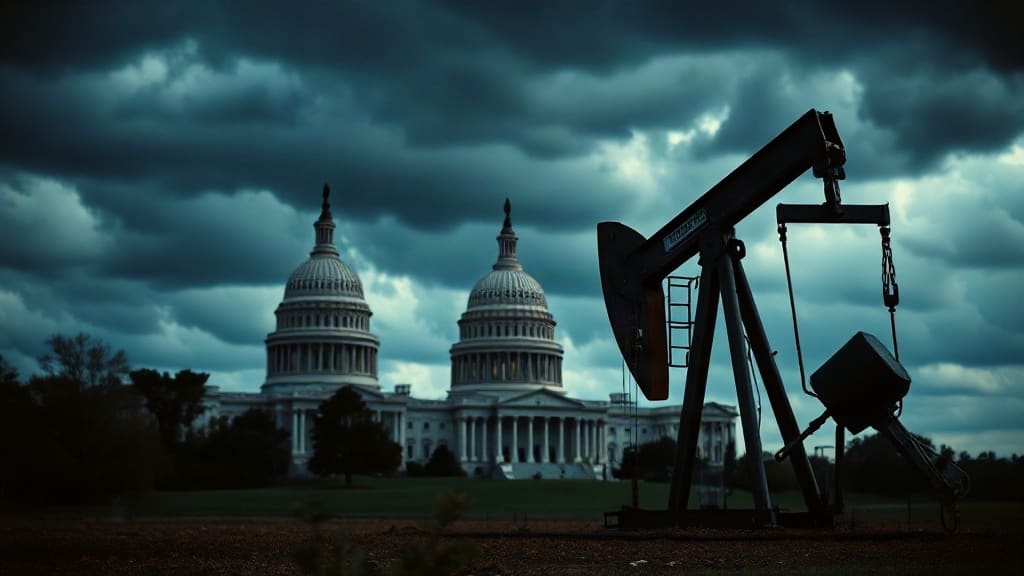
In a statement that has reignited debate over foreign policy and election-year politics, former President Donald Trump declared that any potential war with Iran would not conclude until after the upcoming November elections. Speaking at a campaign event, Trump linked the ongoing tensions with Tehran directly to the electoral calendar, asserting that the Iranian leadership has a vested interest in influencing the outcome of the vote. The remarks come amid heightened concerns over energy prices and geopolitical instability, with Trump suggesting that oil prices, too, would remain elevated until the ballots are counted.
Trump's comments arrive at a moment when the Middle East remains a flashpoint in American politics. The former president has repeatedly criticized the current administration's handling of Iran, arguing that a tougher stance would have prevented the current crisis. His latest assertion, however, goes further by explicitly tying the timeline of any military engagement to the domestic political season. This framing serves a dual purpose: it positions Trump as a strongman who understands the region, while also casting his opponents as weak and susceptible to foreign manipulation.
The Context Behind Trump's Iran War Remarks
To understand the weight of Trump's statement, it is essential to revisit the broader context of U.S.-Iran relations. Since the U.S. withdrawal from the Joint Comprehensive Plan of Action (JCPOA) in 2018, tensions have ebbed and flowed, with periodic flare-ups including the killing of Qasem Soleimani in 2020. More recently, Iran's nuclear program has advanced, and regional proxy conflicts have intensified. The current administration has sought a diplomatic path, but critics argue that this approach has emboldened Tehran.
Trump's claim that the war "won't end until after the crucial November elections" implies that Iran is deliberately prolonging the standoff to affect the vote. While no concrete evidence was provided, the statement taps into a familiar narrative: that foreign adversaries prefer a particular candidate or party. This line of reasoning has been used by both sides of the aisle in past elections, but Trump's direct linkage of military conflict to the election date is unusually explicit.
Oil Prices and the Election Connection
One of the most tangible ways Iran can impact American voters is through oil prices. Trump was quick to connect the two, saying that oil prices would not come down until after the November races. The logic is straightforward: instability in the Strait of Hormuz, through which a significant portion of the world's oil passes, can drive up crude prices. Higher prices at the pump are a potent political weapon, historically correlating with lower approval ratings for incumbents.
Whether Iran is actively manipulating oil markets to influence the election is a matter of debate. Some analysts argue that Iran's primary goal is to maximize its own revenue and strategic leverage, not to sway American voters. Others point to Tehran's past statements expressing preference for certain U.S. leaders. Regardless of intent, the perceived connection between foreign policy and domestic economic pain is a powerful narrative for a challenger like Trump.
Why Trump's Statement Matters for Voters
For voters, Trump's remarks frame the election as a referendum not just on domestic policy but on national security and energy independence. The message is clear: a vote for the current administration is a vote for continued instability and high gas prices. Conversely, a vote for Trump is portrayed as a return to a more forceful posture that would supposedly bring Iran to heel and lower costs.
This framing is not without its critics. Some foreign policy experts caution against oversimplifying a complex geopolitical situation. They note that military conflict with Iran would likely cause a massive spike in oil prices, at least in the short term, and could have unintended consequences for regional stability. Furthermore, the idea that Iran is simply waiting for the election to end ignores the possibility that Tehran may be pursuing its own long-term strategic objectives independent of American politics.
The Role of Election-Year Politics in Foreign Policy
Trump's comments also highlight a broader phenomenon: the intersection of foreign policy and election-year politics. Throughout American history, presidents and candidates have been accused of using foreign crises to rally support or distract from domestic troubles. The so-called "October Surprise" is a well-known trope in political journalism. Trump's statement turns this concept on its head by suggesting that a foreign power is orchestrating a surprise for its own purposes.
This narrative can be effective because it taps into a sense of national vulnerability. If voters believe that a foreign adversary is trying to manipulate the election, they may be more inclined to support a candidate who promises to stand up to that adversary. Trump has long positioned himself as a tough negotiator who is not afraid to use military force when necessary. His Iran comments reinforce that image.
Analyzing the Credibility of Trump's Claim
It is important to approach Trump's statement with a critical eye. While it is plausible that Iran is aware of the U.S. election calendar and may adjust its tactics accordingly, the claim that a war would "end" only after the election is speculative. Wars and military conflicts are not typically scheduled around foreign elections; they are driven by a complex mix of strategic, economic, and ideological factors. Moreover, the current administration has not declared war on Iran, and the U.S. is not officially engaged in a full-scale conflict with the country.
Trump's assertion about oil prices is similarly unproven. Oil markets are influenced by a wide range of factors, including global demand, OPEC production decisions, and natural disasters. While geopolitical tensions in the Middle East certainly play a role, attributing price movements solely to Iran's election interference oversimplifies a complex global market.
Nevertheless, Trump's remarks are likely to resonate with his base, which views him as a straight-talking leader who tells it like it is. The lack of evidence may not matter to voters who already distrust the current administration's foreign policy. In the high-stakes environment of a presidential election, perception often trumps reality.
Potential Impacts on the November Elections
The timing of Trump's statement is no accident. With the November elections approaching, both candidates are vying for the support of undecided voters, particularly in swing states where economic concerns are paramount. High gas prices are a kitchen-table issue that affects nearly every American. By linking those prices to Iran and the current administration's policies, Trump is attempting to turn a foreign policy issue into a pocketbook issue.
If oil prices remain elevated or rise further in the coming months, Trump's narrative could gain traction. Conversely, if prices stabilize or fall, the argument may lose some of its potency. Much will depend on events in the Middle East and the global economy, both of which are notoriously unpredictable.
What Experts Are Saying
Reactions to Trump's comments have been mixed. Some conservative commentators have praised him for speaking bluntly about the connection between foreign policy and energy prices. Others, including some former military officials, have warned that such statements could embolden Iran or create a self-fulfilling prophecy. If Iran believes that the U.S. is distracted by the election, it might be more inclined to take provocative actions.
On the left, Trump's remarks have been characterized as fearmongering and an attempt to politicize national security. Critics argue that the former president is willing to risk international tensions for political gain. They also point out that Trump's own record on Iran, including the withdrawal from the nuclear deal and the Soleimani strike, contributed to the current instability.
Conclusion: A Political Gambit with Real-World Implications
Donald Trump's assertion that the Iran war won't end until after the November elections is a calculated political gambit designed to frame the election as a choice between strength and weakness, prosperity and hardship. While the claim lacks concrete evidence, it taps into genuine voter anxieties about gas prices and national security. Whether it will sway the electorate remains to be seen, but one thing is certain: the intersection of foreign policy and election-year politics will continue to be a central theme of the campaign.
As voters head to the polls, they will weigh not only the candidates' domestic agendas but also their approaches to Iran and the broader Middle East. Trump's comments serve as a reminder that in an interconnected world, events thousands of miles away can have a direct impact on the ballot box.
Frequently Asked Questions
Why does Trump say the Iran war won't end until after November elections?
Trump suggests that Iran is deliberately prolonging tensions to influence the U.S. election, hoping for a change in leadership that might be more favorable to Tehran. He links this to oil prices, implying that Iran benefits from higher prices that hurt American consumers and, by extension, the incumbent administration.
Is there any evidence that Iran is manipulating oil prices to affect the election?
No direct evidence has been presented. Oil prices are influenced by many factors, including global supply and demand, OPEC decisions, and geopolitical events. While Iran's actions can affect prices, attributing current levels solely to election interference is speculative.
How could high oil prices impact the November elections?
High gas prices are a significant economic concern for voters. Historically, rising fuel costs can lead to lower approval ratings for the party in power. If voters blame the current administration for high prices, they may be more inclined to support the challenger, which is the outcome Trump is hoping for.
What is the current status of U.S.-Iran relations?
U.S.-Iran relations remain tense, with ongoing disputes over Iran's nuclear program, regional proxy activities, and sanctions. Diplomatic efforts have had limited success, and military confrontation remains a possibility, though no full-scale war is currently underway.
Has Trump made similar claims about foreign interference in elections before?
Yes, Trump has a history of alleging foreign interference in U.S. elections, including claims about China and other countries. These statements often serve to question the legitimacy of electoral outcomes and rally his base around a strongman image.