
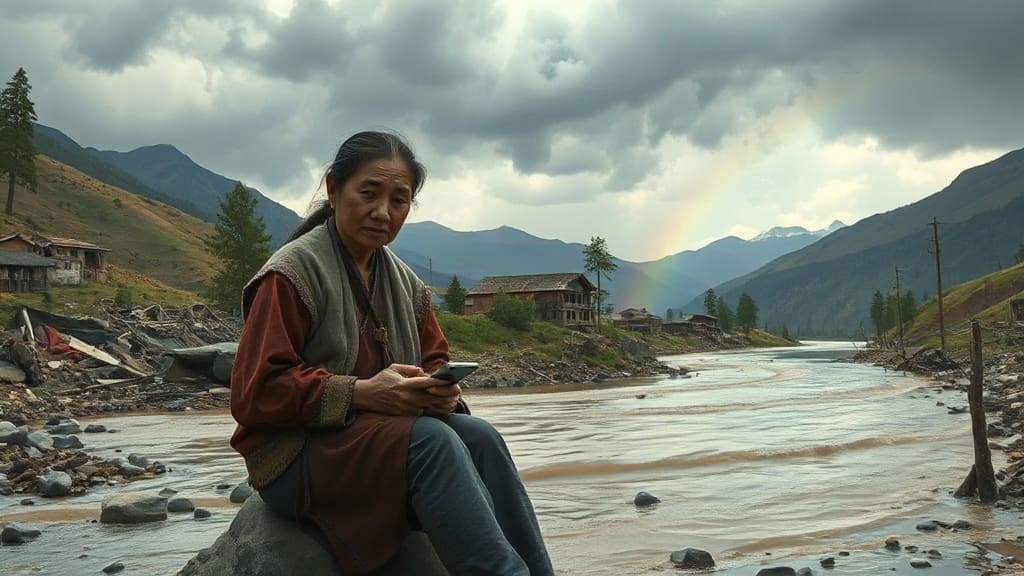
The silence from official channels has been deafening for families whose loved ones vanished in the sudden flood that swept through Tibet's side of the China-Nepal border. With no official list of the missing released by authorities, desperate relatives have taken to social media, posting photographs, names, and heart-wrenching pleas in the hope that someone, somewhere, might have information. What emerges from these scattered posts is a portrait of collective grief, frustration, and a community struggling to navigate an information void that has left them feeling abandoned.
In the days following the disaster, online platforms have become makeshift memorial walls and search forums. A woman posts a photo of her brother, last seen near a riverbank that is now a torrent of mud and debris. A father shares a voice note, his voice cracking as he asks if anyone has seen his daughter. These posts, often written in Tibetan and Chinese, are shared across WeChat groups, Weibo, and international platforms, bridging the geographical and cultural divide between the remote Himalayan region and the wider world.
The Flood's Immediate Aftermath and the Information Gap
The flood, triggered by a combination of heavy monsoon rains and glacial lake outbursts, struck with little warning. Villages along the river valleys were inundated, roads were washed away, and communication lines were severed. In the chaos, the full extent of the human toll remains unclear. Official statements have been sparse, focusing on rescue efforts and infrastructure damage, but offering no specific numbers of the dead or missing. This lack of transparency has fueled anxiety and speculation, pushing families to seek answers through unofficial channels.
Social media has become the primary tool for these families. On platforms like Weibo, posts tagged with location markers and disaster-related hashtags have proliferated. Users share maps, drone footage, and eyewitness accounts, attempting to piece together what happened. Some posts are simple: a name, a photo, a phone number. Others are longer, recounting the last known movements of a missing person. The desperation is palpable, and the comments sections are filled with messages of support, prayers, and occasional tips that lead nowhere.
Why the Official Silence Hurts More Than the Flood Itself
For many, the absence of an official list is a second trauma. Families of flood victims in Tibet are left in a limbo of not knowing, unable to begin mourning or to hold proper funeral rites. In Tibetan Buddhist tradition, the days following death are critical for guiding the consciousness of the deceased; without confirmation, families cannot perform these rituals. The psychological toll is immense. One woman wrote, "I cannot sleep, I cannot eat. I just scroll through my phone, hoping to see his face in someone else's post."
The information vacuum also raises broader questions about disaster management and government accountability in the region. While the Chinese government has historically been quick to mobilize resources for natural disasters, the lack of transparent casualty reporting in remote and politically sensitive areas like Tibet has drawn criticism from human rights organizations and international observers. The families' online pleas, in this context, become not just personal expressions of grief but also subtle acts of defiance against an opaque system.
The Role of Online Communities in Filling the Void
In the absence of official information, online communities have stepped in to create their own networks of support and information sharing. WeChat groups dedicated to the flood have sprung up, with members compiling lists of missing persons, verifying reports, and organizing volunteer search parties. Some groups have even crowdfunded for drones and other equipment to aid in the search. This grassroots response is a testament to the resilience of the affected communities, but it also highlights the failings of top-down communication.
International platforms have also played a role. Tibetan diaspora communities abroad have been sharing posts from relatives, translating them into English and other languages to widen the reach. Human rights groups have used these posts to document the disaster's impact, pressuring authorities for more information. The online grief, therefore, transcends borders, becoming a global conversation about accountability and the right to know.
Challenges of Verifying Information Online
While the online outpouring has been a lifeline for many, it is not without its pitfalls. Misinformation and rumors have spread alongside genuine pleas. False reports of found survivors have given hope only to cruelly dash it. Scammers have also preyed on the vulnerable, setting up fake donation pages. This underscores the need for caution and verification. Families are learning to cross-check information, to rely on trusted community leaders, and to be wary of too-good-to-be-true claims.
For journalists and researchers, the online posts offer a raw, unfiltered glimpse into the disaster's human toll, but they must be handled with care. Ethical considerations around privacy and consent are paramount. Many families are sharing personal information out of desperation, not for public consumption. Reposting without context or permission can cause further harm. The line between raising awareness and exploiting grief is thin.
The Long Road Ahead for Families and the Region
As the floodwaters recede, the search for the missing continues, both on the ground and online. The emotional and psychological scars will linger long after the physical cleanup is complete. Families are calling for a formal mechanism to report and track missing persons, and for the government to release whatever information it has. The online posts, in the meantime, serve as a poignant archive of a community's pain and resilience.
The disaster has also reignited discussions about climate change and its impact on the Himalayan region. Glacial lake outburst floods are becoming more frequent as global temperatures rise, threatening communities on both sides of the China-Nepal border. The need for early warning systems, resilient infrastructure, and transparent disaster response has never been more urgent. The families' grief, broadcast across the digital void, is a stark reminder of what is at stake.
Frequently Asked Questions
Why hasn't an official list of missing persons been released for the Tibet flood?
Official statements have been limited, focusing on rescue operations and infrastructure without providing specific casualty numbers. This lack of transparency may stem from bureaucratic challenges, the remote location, or political sensitivities in the region. Families have been left to rely on unofficial channels for information.
How are families using social media to find missing loved ones?
Families are posting photos, names, and last known locations of missing individuals on platforms like Weibo and WeChat. They also join disaster-specific groups where they share updates, verify reports, and coordinate volunteer search efforts. These online communities have become vital support networks in the absence of official help.
What are the main challenges of verifying information shared online about the flood?
Misinformation and rumors are common, with false reports of survivors and fraudulent donation scams. Families and volunteers must cross-check information through multiple sources and rely on trusted community leaders. Ethical concerns about privacy and consent also arise when sharing personal details of missing persons.
How has the Tibetan diaspora responded to the flood online?
Tibetan communities abroad have been actively sharing posts from relatives, translating them into English and other languages to increase visibility. They have also used these posts to document the disaster and pressure authorities for more transparency, turning local grief into a global conversation.
What long-term impacts could this flood have on the region?
Beyond the immediate loss of life, the flood highlights the growing threat of climate change-induced disasters like glacial lake outburst floods. The region needs better early warning systems, resilient infrastructure, and transparent disaster response mechanisms. The psychological toll on families, especially those unable to perform traditional funeral rites, will also be long-lasting.