
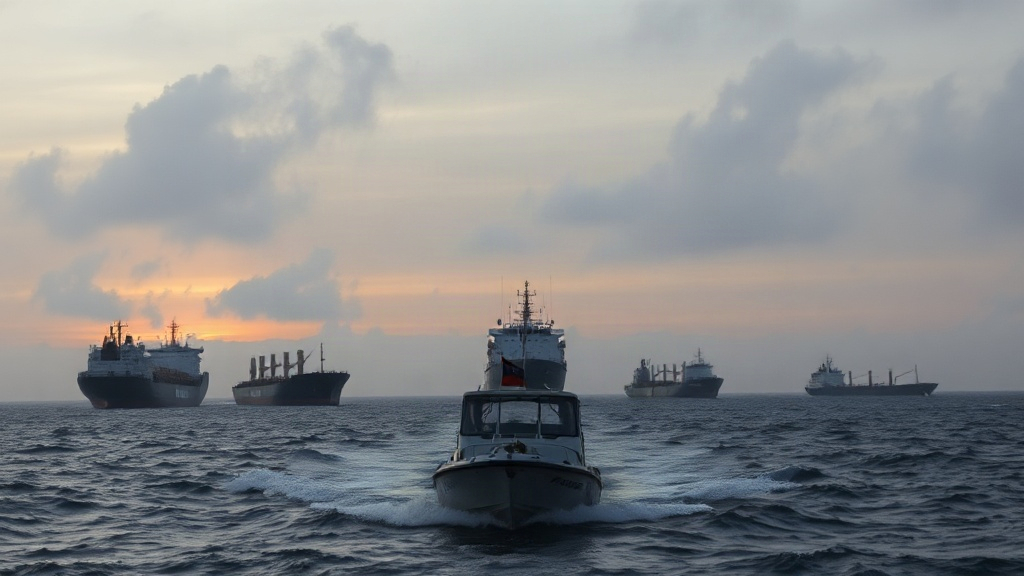
The global oil market just got another jolt. Crude prices spiked to $108 a barrel after Gulf states announced they were postponing a much-anticipated meeting with Iran over the security of the Strait of Hormuz. The news hit traders hard, reviving fears that one of the world's most critical energy chokepoints could once again become a flashpoint for disruption. For anyone watching fuel costs, shipping routes, or the broader economy, this delay is more than a diplomatic hiccup; it's a signal that tensions in the region remain dangerously unresolved.
What Exactly Happened with the Hormuz Talks?
The meeting was supposed to bring together representatives from several Gulf Cooperation Council (GCC) states and Iranian officials to discuss navigation safety and de-escalation measures in the Strait of Hormuz. The strait is a narrow waterway between the Persian Gulf and the Gulf of Oman, and roughly a fifth of the world's oil passes through it every day. Any threat to that flow sends immediate shockwaves through energy markets.
According to sources familiar with the matter, the postponement was not due to a single dramatic event but rather a combination of unresolved procedural disagreements and lingering distrust. Some Gulf states reportedly wanted a broader regional security framework on the table before sitting down with Tehran, while Iran insisted the agenda be limited strictly to maritime issues. The result: no meeting, no progress, and a market left to speculate about what comes next.
Why the Strait of Hormuz Matters More Than Ever
To understand why a postponed meeting can move oil prices by several dollars, you have to appreciate the geography. The Strait of Hormuz is only about 21 miles wide at its narrowest point, yet it handles around 20 million barrels of oil per day. That's roughly 20% of global consumption. It's also a key route for liquefied natural gas (LNG) from Qatar, which supplies major markets in Asia and Europe.
Over the past decade, the strait has been the scene of several tense encounters. Attacks on tankers, drone strikes, and the seizure of vessels have all occurred in or near these waters. Each incident caused brief but sharp spikes in oil prices. The current delay in talks doesn't mean an immediate crisis, but it removes a potential off-ramp for tensions. In other words, the market is pricing in the risk that a miscalculation or minor incident could spiral into a larger disruption.
Market Reaction: A Quick Surge to $108
When news of the postponement broke, benchmark crude futures jumped nearly 3% in a matter of hours. Brent crude, the international standard, touched $108 per barrel before settling slightly lower. West Texas Intermediate (WTI), the U.S. benchmark, also climbed, though it remained a few dollars below Brent due to regional supply dynamics.
This price level hasn't been seen in months. Earlier in the year, many analysts had predicted a gradual easing of prices as global demand softened and non-OPEC supply increased. But geopolitical risk has a way of overriding fundamentals. The delay in talks is a classic example: no actual barrels were lost, yet the perceived risk of future supply loss was enough to push prices higher.
Traders also pointed to low spare capacity in the global system. OPEC and its allies have been managing production carefully, and there isn't a huge cushion if a major disruption occurs. That makes the market particularly sensitive to headlines about the Strait of Hormuz.
What This Means for Consumers and Businesses
For everyday consumers, higher crude prices eventually translate into higher gasoline and diesel costs. In many countries, fuel prices are already a political sore point. A sustained move above $100 per barrel could add pressure on household budgets and slow economic growth. Airlines, shipping companies, and manufacturers are also directly exposed; their fuel and feedstock costs rise quickly when oil spikes.
Central banks are watching too. Oil is a significant component of inflation, and a persistent price increase could force monetary policymakers to keep interest rates higher for longer. That would ripple through borrowing costs for mortgages, car loans, and business investment. In short, a diplomatic delay in the Gulf can end up affecting a family's grocery bill or a small company's expansion plans.
The Diplomatic Backdrop: Why Talks Were Delayed
The postponement didn't happen in a vacuum. Relations between Iran and several Gulf states have been improving in recent years, most notably with the Saudi-Iranian rapprochement brokered by China in 2023. That deal led to the reopening of embassies and a series of high-level visits. However, deep differences remain over Iran's nuclear program, its support for regional proxies, and the presence of foreign military forces in the Gulf.
Some Gulf states, particularly the United Arab Emirates and Bahrain, have been cautious about moving too fast. They want concrete guarantees on maritime security before endorsing any framework that might be seen as rewarding Iran. On the other side, Iranian officials have expressed frustration that their offers for dialogue on the strait have not been met with equal enthusiasm. The result is a classic standoff: both sides say they want talks, but neither is willing to make the first significant concession.
In this context, the postponement is not necessarily a collapse. It may simply be a pause to recalibrate positions. But for the oil market, perception matters as much as reality. A delay is interpreted as a sign that the risk of conflict remains elevated.
What Happens Next? Three Scenarios to Watch
Energy analysts are already sketching out possible paths forward. The first and most optimistic scenario is that the talks are rescheduled within weeks, perhaps with a more limited agenda that both sides can accept. That would likely take some of the geopolitical premium out of oil prices, though not entirely; the underlying risk of Hormuz disruptions would still exist.
The second scenario is a prolonged diplomatic stalemate, where meetings keep getting postponed or produce no tangible results. In that case, oil prices could remain elevated in the $100 to $110 range, with periodic spikes on any news of military activity or shipping incidents. This is a frustrating outcome for consumers and businesses, but not a catastrophic one.
The third and most dangerous scenario is an actual disruption. Even a partial closure of the Strait of Hormuz, whether due to a military confrontation, a major accident, or a deliberate act of sabotage, could send oil prices soaring past $150 or even $200 per barrel. Global stockpiles would be drawn down rapidly, and emergency measures like strategic reserve releases would only provide temporary relief. No one wants this scenario, but the postponement of talks makes it marginally more likely in the eyes of some risk analysts.
Historical Context: Lessons from Past Hormuz Crises
This isn't the first time the Strait of Hormuz has rattled markets. During the Iran-Iraq War in the 1980s, both sides attacked tankers in what became known as the Tanker War. Oil prices spiked, and international navies had to escort commercial vessels. More recently, in 2019, a series of attacks on tankers near the strait, widely attributed to Iran though denied by Tehran, caused brief supply fears and a jump in insurance rates for shipping.
Each crisis eventually de-escalated, but the pattern is clear: the market tends to underestimate the risk until something actually happens. Then it overreacts, and prices swing wildly. The current postponement of talks is a reminder that the underlying tensions have not been resolved; they have merely been managed.
How Investors and Businesses Can Prepare
Given the uncertainty, what should a prudent business or investor do? First, don't panic. Oil prices are volatile, and a single headline can reverse quickly. But it's wise to hedge against the possibility of higher energy costs. Airlines, trucking companies, and manufacturers often use futures and options to lock in fuel prices; now might be a good time to review those strategies.
For consumers, the best defense is energy efficiency. Small changes like driving less, maintaining proper tire pressure, and using programmable thermostats can offset some of the impact of higher fuel prices. On a larger scale, accelerating the shift to electric vehicles and renewable energy reduces dependence on oil from volatile regions, though that's a long-term solution.
From a geopolitical standpoint, the postponement of talks is a wake-up call for importing countries to diversify their energy sources. The United States, for example, has become a major oil producer and is less dependent on Hormuz than it once was. But Europe and Asia remain heavily reliant on Gulf oil and gas. Investing in alternative pipelines, LNG terminals, and strategic reserves can build resilience against future shocks.
The Bottom Line: A Fragile Calm
Oil at $108 is a stark reminder that the global energy system remains vulnerable to events in a narrow strip of water thousands of miles from most consumers. The postponement of talks between Gulf states and Iran over the Strait of Hormuz may seem like a minor diplomatic snag, but its market impact is real. It signals that the region's rivalries are still capable of disrupting the world economy.
For now, the calm is holding. Tankers are still moving, oil is still flowing, and no shots have been fired. But the margin for error is thin. The next few weeks will be critical. If the talks are rescheduled and produce even a modest confidence-building measure, oil prices could retreat. If not, expect more volatility, higher fuel costs, and a renewed focus on one of the world's most important and most dangerous waterways.
Frequently Asked Questions
Why did oil prices jump to $108 after the talks were postponed?
Oil prices jumped because the Strait of Hormuz is a critical chokepoint for global oil supply. When diplomatic talks aimed at reducing tensions in the region are delayed, markets interpret that as a higher risk of potential disruption. Even without an actual supply loss, the perceived risk pushes prices up.
How much oil passes through the Strait of Hormuz daily?
Roughly 20 million barrels of oil pass through the Strait of Hormuz every day. That represents about 20% of global oil consumption and a significant share of the world's liquefied natural gas. Any blockage would have severe consequences for energy prices worldwide.
What were the Gulf states and Iran supposed to discuss?
The planned meeting was intended to address navigation safety and de-escalation measures in the Strait of Hormuz. Gulf states reportedly wanted to include broader regional security issues, while Iran preferred to keep the agenda limited to maritime matters. The disagreement over scope contributed to the postponement.
Could this lead to a military conflict in the Strait of Hormuz?
While no one can predict the future, the postponement of talks does not automatically mean conflict is imminent. However, it removes a potential channel for reducing tensions. The risk of miscalculation or a minor incident escalating into a larger confrontation remains a concern for analysts.
How long will oil prices stay above $100?
That depends on several factors, including whether the talks are rescheduled, the outcome of any future negotiations, and broader supply-demand fundamentals. If diplomatic progress is made quickly, prices could ease. If tensions persist or an actual disruption occurs, prices could go much higher.