
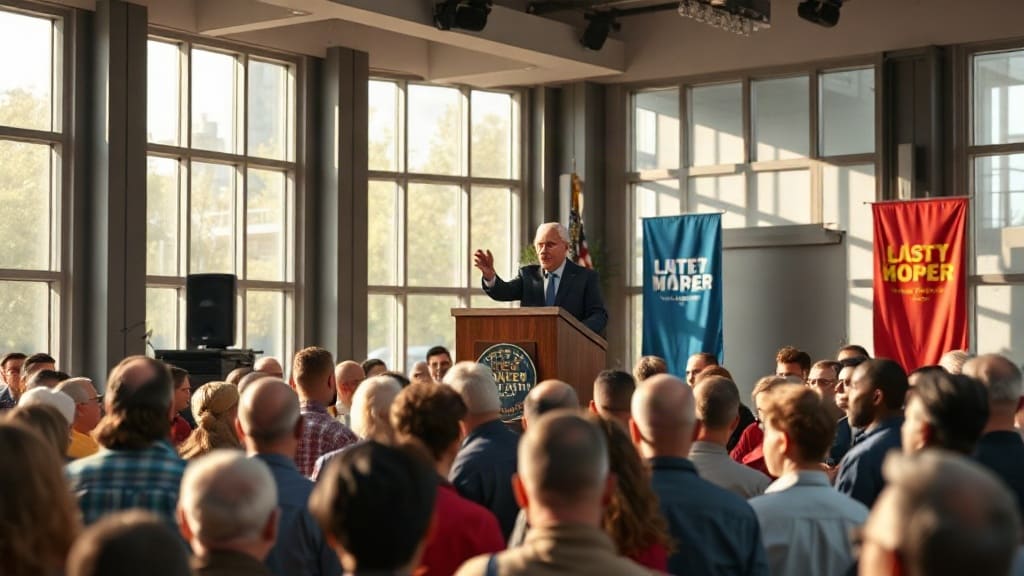
The relationship between a new government and the trade union movement is often a delicate dance, especially when the political honeymoon begins to fade. For Prime Minister Andy Burnham, that moment may have arrived sooner than expected. Paul Nowak, the general secretary of the Trades Union Congress, has issued a stark warning: the government's current approach to migration reform is not just flawed, it is fundamentally unfair. And if left unaddressed, it could have severe consequences for public services and social cohesion.
Nowak's comments, made ahead of the TUC's annual congress in Brighton, are not simply a routine critique from the labour movement. They reflect a deep-seated anxiety that the government's policies are drifting away from the values that many of its supporters hold dear. At the heart of his concern is the impact on social care, a sector already stretched to breaking point. By tightening immigration rules without a robust domestic workforce plan, the government risks exacerbating staff shortages and leaving vulnerable people without the support they need.
The Core of the Criticism
Nowak has been careful to acknowledge the "sense of optimism" that surrounded Burnham's fledgling government. After years of political turbulence, there was a genuine hope that a new administration would bring a more compassionate and pragmatic approach to governance. However, that optimism is now being tested by the specifics of the migration reforms. The TUC leader argues that the current framework, inherited and adapted from previous policies, is not fit for purpose. It creates unnecessary barriers for workers who are essential to the economy, while simultaneously failing to address the underlying issues that drive public concern about immigration.
One of the most striking aspects of Nowak's intervention is his warning about the potential political fallout. He suggests that poorly designed migration policies can inadvertently fuel far-right sentiment. This is not a new argument, but it carries particular weight coming from a figure who represents millions of workers. When mainstream politics fails to offer sensible solutions, the vacuum is often filled by extremists who exploit fear and division. By making the system appear arbitrary and unfair, the government risks playing into the hands of those who seek to scapegoat migrants for broader social and economic problems.
The Social Care Conundrum
The social care sector is a perfect illustration of the contradictions within current migration policy. The UK has long relied on overseas workers to fill roles in care homes, domiciliary care, and the NHS. These are often demanding, low-paid jobs that many domestic workers are reluctant to take. Yet, under the new reforms, many of these workers face higher salary thresholds, stricter visa requirements, and a more complicated path to settlement. The result is a system that tells care providers they need staff, but then makes it harder for them to recruit from abroad.
This is not just a bureaucratic problem; it is a human one. Care workers who have been in the UK for years, contributing to their communities and paying taxes, suddenly find their futures uncertain. Families who depend on consistent, compassionate care for elderly relatives face the prospect of losing trusted caregivers. And the wider economy suffers as productivity in the care sector declines. Nowak's call for an overhaul is not just about fairness to migrants; it is about the practical reality of running essential public services.
The TUC has long argued for a more strategic approach to labour migration. Rather than treating immigration as a tap to be turned on and off according to political whim, the union movement advocates for a system that is responsive to genuine labour market needs. This includes better workforce planning, investment in training and upskilling for domestic workers, and a points-based system that recognises the value of all workers, not just the highest earners. Without these reforms, the UK will continue to lurch from crisis to crisis in sectors like social care.
Political Risks and Opportunities
For Burnham, the migration issue is a political minefield. On one hand, he faces pressure from the right of his own party and from opposition parties to be tough on immigration. On the other hand, he must balance the expectations of his union allies and the progressive wing of his coalition. Nowak's public criticism is a reminder that the trade unions are not just passive supporters; they are active stakeholders with their own priorities and red lines.
The prime minister has a choice. He can either dismiss the TUC's concerns as special pleading from a vested interest, or he can engage constructively and seek a compromise that addresses both the legitimate concerns about border control and the economic and social need for migrant workers. The latter approach is more difficult, but it is also more likely to produce sustainable policies. Ignoring the unions would be a risky strategy, especially at a time when the government needs all the allies it can get to push through its broader agenda.
There is also a broader lesson here about the nature of political leadership. Burnham campaigned on a platform of change and renewal. To deliver on that promise, he must be willing to challenge entrenched orthodoxies, including those within his own government. The migration reforms, as they currently stand, are a product of political compromise and bureaucratic inertia. They do not reflect a coherent vision for the country's future. By listening to voices like Nowak's, Burnham has an opportunity to demonstrate that he is serious about building a fairer, more prosperous society.
What Happens Next?
The TUC congress in Brighton will be a crucial test for the government. It is the first major gathering of the trade union movement since the election, and it will set the tone for the relationship between the unions and the new administration. Nowak's speech is likely to be closely watched, not just for its policy content but for its tone. If he strikes a conciliatory note, it may signal that a deal is possible. If he adopts a more confrontational stance, it could be the start of a prolonged period of friction.
In the coming months, the government is expected to publish further details of its migration plans, including the outcome of the ongoing review of the points-based system. This will be a key moment for the TUC and other stakeholders to make their case. The social care sector, in particular, will be looking for concrete assurances that its workforce needs will be met. The government must also be mindful of the wider political context, including the upcoming local elections and the need to maintain public confidence in its handling of immigration.
The challenge for Burnham is to navigate these competing pressures without losing sight of his core values. The migration debate is often framed in binary terms: open borders versus closed borders, compassion versus control. But the reality is far more nuanced. A sensible migration policy is one that is fair, efficient, and responsive to both economic needs and humanitarian obligations. It is a policy that recognises the contribution of migrants while also addressing the legitimate concerns of citizens. Achieving that balance is not easy, but it is essential for a healthy democracy.
Nowak's warning should not be dismissed as mere rhetoric. It is a genuine expression of concern from a leader who understands the stakes. The TUC is not asking for unlimited immigration or the abolition of all controls. It is asking for a system that works for everyone, not just the privileged few. If the government can deliver that, it will have earned the support of the trade union movement and, more importantly, the trust of the British people.
Frequently Asked Questions
What exactly did the TUC general secretary say about migration reforms?
Paul Nowak described the current migration reforms as "fundamentally unfair" and warned that they could overstretch social care services and fuel far-right sentiment. He made these comments before the TUC's annual congress, urging Prime Minister Andy Burnham to overhaul the system.
Why does the TUC believe social care is at risk from migration reforms?
The social care sector relies heavily on overseas workers, but new visa rules and salary thresholds make it harder to recruit and retain these essential staff. This could worsen existing staff shortages and reduce the quality of care for vulnerable people.
How could migration reforms fuel far-right sentiment according to the TUC?
If the system appears arbitrary and unfair, it can create a vacuum that extremist groups exploit by blaming migrants for social problems. A fair and transparent policy is seen as a safeguard against such narratives.
What changes does the TUC want to see in migration policy?
The TUC advocates for a strategic approach that includes better workforce planning, investment in domestic skills, and a points-based system that values all workers, not just high earners. This would ensure migration meets genuine labour market needs.
Has Andy Burnham responded to the TUC's criticism?
As of now, there has been no detailed public response from the prime minister. However, the government is expected to publish further details on migration plans, which will be closely watched by unions and other stakeholders.