
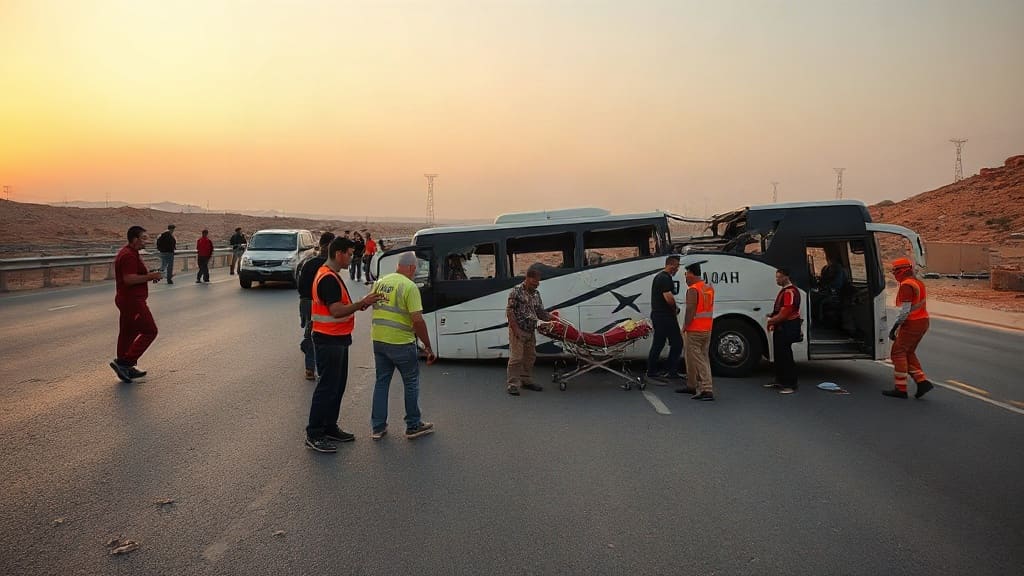
In a devastating road accident in Egypt's Sinai Peninsula, a bus carrying dozens of passengers overturned on a highway, leaving at least 22 people dead and 28 others injured, according to local officials. The crash occurred in an area frequented by tourists, raising concerns about safety on roads that connect popular destinations in this historically significant but geographically challenging region.
The exact cause of the accident is still under investigation, but initial reports suggest that the driver may have lost control due to a combination of factors, including poor road conditions, high speed, or a mechanical failure. The Sinai Peninsula, known for its rugged terrain and long stretches of desert highways, has seen a number of similar tragedies in recent years, prompting calls for improved infrastructure and stricter enforcement of traffic regulations.
What Happened in the Sinai Bus Crash
The bus was traveling along a major route in the Sinai Peninsula when it suddenly veered off the road and overturned. Emergency services rushed to the scene, and the injured were transported to nearby hospitals for treatment. Medical staff and local authorities worked through the night to identify the victims and notify their families. The identities of the passengers have not been fully disclosed, but officials confirmed that the bus was carrying both Egyptian citizens and foreign tourists.
Witnesses described a chaotic scene after the crash, with debris scattered across the highway and passersby attempting to assist the injured before professional help arrived. One local resident, who arrived at the scene shortly after the accident, said the bus was "completely wrecked" and that some passengers were trapped inside for several minutes. These accounts, while not independently verified, underscore the severity of the impact.
Road Safety Challenges in Egypt and the Sinai
Egypt has long struggled with a high rate of road accidents, a problem that is particularly acute in remote areas like the Sinai Peninsula. According to data from the World Health Organization, road traffic injuries are a leading cause of death in the country, with thousands of fatalities reported each year. Several factors contribute to this grim statistic: poorly maintained roads, insufficient lighting, lax enforcement of speed limits, and a lack of regular vehicle inspections.
The Sinai Peninsula presents additional challenges due to its desert climate and long, isolated stretches of highway. Drivers often face sudden sandstorms, sharp curves, and the risk of encountering wildlife or military checkpoints. The region's security situation has also led to periodic road closures and detours, which can force traffic onto less safe secondary roads. In this context, the recent bus crash is a stark reminder of the need for comprehensive road safety reforms.
Tourism in the Sinai and the Impact of the Accident
The Sinai Peninsula is a major tourist destination, home to popular resorts such as Sharm el-Sheikh and Dahab, as well as historical sites like St. Catherine's Monastery. The tourism industry has been recovering in recent years after a period of decline due to security concerns and the COVID-19 pandemic. However, accidents like this one can have a chilling effect on visitor confidence, especially when they involve foreign nationals.
Local tour operators and hotel owners are already worried that the crash could deter tourists from booking trips to the region. "This is a terrible tragedy, and our hearts go out to the families," said one hotel manager in Sharm el-Sheikh, who asked not to be named. "But we also hope that people understand this was an accident, not a reflection of the overall safety of the area." The Egyptian government has previously invested in road improvement projects, and officials may now face renewed pressure to accelerate these efforts.
Government Response and Investigation
Egyptian authorities have launched an official investigation into the cause of the crash. The Ministry of Interior has dispatched a team of traffic experts to the site to examine the vehicle, the road conditions, and other possible contributing factors. The bus driver, who reportedly survived with serious injuries, is expected to be questioned once his condition stabilizes. Depending on the findings, criminal charges could be filed if negligence is determined.
Prime Minister Mostafa Madbouly expressed his condolences to the victims' families and ordered local authorities to provide all necessary support. The Ministry of Health has declared a state of emergency at hospitals in the region to handle the influx of injured patients. These measures reflect the government's awareness of the public outrage that often follows such incidents, and its desire to demonstrate accountability.
The Human Toll: Stories of Loss and Survival
Behind the statistics are individual stories of grief and resilience. One survivor, a 34-year-old Egyptian man who was traveling to visit his family, described the moment of impact as "like an explosion." He suffered a broken arm and multiple bruises but managed to crawl out of the wreckage. "I saw people crying, calling for help," he said from his hospital bed. "I just tried to help anyone I could."
Among the dead are reportedly several children, a fact that has deepened the sense of sorrow in local communities. Funerals are expected to take place over the coming days, and many families are still waiting for official confirmation of their loved ones' status. The emotional impact of the crash will be felt for a long time, not only by those directly affected but also by the broader Egyptian society, which is no stranger to such tragedies.
What Can Be Done to Prevent Future Accidents?
Road safety experts argue that a combination of engineering, enforcement, and education is needed to reduce the number of fatal accidents in Egypt. Specific recommendations include upgrading road surfaces and signage, installing more guardrails and rumble strips, and increasing the number of speed cameras. Additionally, stricter licensing requirements for commercial bus drivers and mandatory rest periods could help address the problem of driver fatigue.
Some activists are calling for a public awareness campaign to change driving culture, which often tolerates speeding and reckless overtaking. Others point to the need for better emergency response systems, particularly in remote areas where ambulances may take a long time to arrive. While these measures require significant investment, the cost of inaction is much higher in terms of human lives lost.
Conclusion: A Tragedy That Demands Action
The bus crash in the Sinai Peninsula is a heartbreaking reminder of the fragility of life and the urgent need for improved road safety. As the investigation continues, the focus will inevitably shift from grief to questions of accountability and prevention. For now, the families of the victims are left to mourn, and the nation is left to reflect on how to prevent such a tragedy from happening again.
Frequently Asked Questions
How many people died in the Egypt bus crash?
At least 22 people were killed in the bus crash in Egypt's Sinai Peninsula, according to official reports. The death toll could rise as some of the injured are in critical condition.
Where exactly did the bus crash occur?
The accident took place on a highway in the Sinai Peninsula, an area known for its tourist attractions. The exact location has not been disclosed, but it was described as a route popular with tourists.
What caused the bus to overturn?
The cause is still under investigation. Early theories include driver error, speeding, poor road conditions, or a mechanical issue. No official conclusion has been announced.
Were there foreign tourists on the bus?
Yes, officials confirmed that the bus was carrying both Egyptian citizens and foreign tourists. The nationalities of the foreign victims have not been fully released.
What is the government doing in response to the crash?
The Egyptian government has launched an investigation, sent traffic experts to the scene, and ordered hospitals in the region to be on high alert. The Prime Minister offered condolences and promised support for the victims' families.