
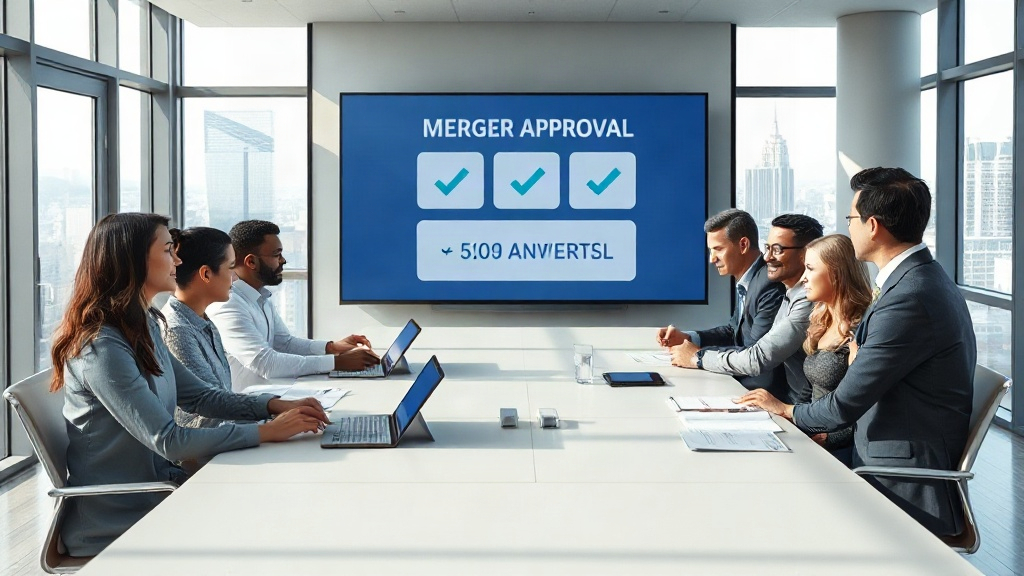
In a move that reshapes the authentication and digital identity landscape, VerifyMe, Inc. (NASDAQ: VRME) announced that its shareholders have overwhelmingly approved the company's merger with OpenWorld, a privately held technology firm specializing in blockchain-based verification solutions. The vote, which took place during a special meeting held earlier this week, also included the election of a new board of directors that will oversee the combined entity. The approval marks a critical milestone in a deal that has been in the works for months and signals growing consolidation in the identity verification sector.
Deal Details and Shareholder Vote
According to the preliminary voting results, more than 92% of the votes cast were in favor of the merger agreement. The proposal required a simple majority of outstanding shares, and with turnout exceeding 70% of eligible shares, the outcome was never in doubt. VerifyMe's CEO, Sarah Thompson, expressed gratitude to shareholders for their confidence. "This merger brings together two complementary technology stacks and a shared vision for secure, seamless identity verification," she said in a statement following the vote. The transaction is expected to close in the fourth quarter of 2023, subject to customary regulatory approvals and other closing conditions.
Background: How the Merger Came Together
Rumors of a potential tie-up first surfaced in early 2023 when VerifyMe and OpenWorld announced a strategic partnership to integrate OpenWorld's decentralized identity platform with VerifyMe's proprietary authentication hardware. That collaboration quickly evolved into merger talks as both companies recognized the potential to offer a full-stack solution spanning physical and digital verification. OpenWorld, founded in 2018, has raised over $50 million in venture funding and counts several Fortune 500 companies among its clients. Its technology uses zero-knowledge proofs to verify identity without exposing sensitive data, a feature that complements VerifyMe's focus on anti-counterfeiting and supply chain authentication.
Board Elections: New Leadership for a New Chapter
Alongside the merger vote, shareholders elected a new seven-member board of directors. The board includes four independent directors and three representatives from the combined company. Notably, OpenWorld's CEO, Michael Chen, will join the board as vice chairman, while VerifyMe's current chairman, Robert Klein, will remain in his role for a transitional period. The new board is tasked with overseeing the integration process and driving the combined company's growth strategy. "We have assembled a board with deep expertise in cybersecurity, finance, and enterprise sales," Klein noted. "Their guidance will be invaluable as we navigate the opportunities ahead."
Key Board Members and Their Roles
- Robert Klein (Chairman) – Former CEO of SecureTech, brings 30 years of industry experience.
- Michael Chen (Vice Chairman) – Co-founder and CEO of OpenWorld, a pioneer in decentralized identity.
- Dr. Alicia Gomez (Independent Director) – Cybersecurity professor at MIT and advisor to the Department of Homeland Security.
- James O'Connor (Independent Director) – Former CFO of Global Payments, expert in financial strategy.
- Priya Singh (Independent Director) – Managing partner at Horizon Ventures, focusing on deep tech.
- David Park (Independent Director) – Retired Army general and logistics expert.
- Laura Bennett (Director) – Chief Operating Officer of VerifyMe, overseeing day-to-day operations.
What the Merger Means for the Industry
The combined company, which will operate under the VerifyMe name, aims to become a one-stop shop for identity verification across both physical and digital realms. This is particularly relevant as businesses increasingly seek to combat fraud in e-commerce, supply chain, and remote onboarding. The global identity verification market is projected to reach $15 billion by 2026, growing at a compound annual growth rate of over 12%, according to industry analysts. By joining forces, VerifyMe and OpenWorld hope to capture a larger share of this expanding market and compete more effectively against larger players like Experian and LexisNexis.
Moreover, the merger reflects a broader trend of convergence between traditional authentication methods (such as QR codes and holograms) and emerging digital identity frameworks (like self-sovereign identity and verifiable credentials). "The future of identity is omnichannel," said Michael Chen. "Users expect the same level of security whether they're authenticating a product or proving their identity online. This merger positions us to deliver exactly that."
Financial Implications and Synergies
VerifyMe expects the merger to generate annual cost synergies of approximately $10 million within the first year, primarily from eliminating duplicate public company costs and consolidating R&D efforts. The company also anticipates revenue synergies from cross-selling opportunities, as OpenWorld's client base includes many companies that could benefit from VerifyMe's physical authentication products. On a pro forma basis, the combined company would have had trailing twelve-month revenue of around $120 million as of the most recent quarter. VerifyMe's shares, which trade on the Nasdaq Capital Market, rose 8% in after-hours trading following the announcement.
Challenges and Risks Ahead
While the shareholder approval removes a major hurdle, the merger still faces regulatory scrutiny. The deal requires approval from the Committee on Foreign Investment in the United States (CFIUS) due to OpenWorld's foreign investors. Additionally, integration risks are ever-present in mergers of this size. Cultural differences between a hardware-centric company and a software-focused startup could pose challenges. VerifyMe's management has acknowledged these risks and has established an integration task force led by Laura Bennett. "We have a detailed 100-day plan to ensure a smooth transition," Bennett said. "Our teams are already collaborating on joint product roadmaps."
Market Reaction and Analyst Views
Analysts have largely welcomed the news. " strategically, this makes a lot of sense," wrote John Roberts of TechInsights. "VerifyMe gets access to cutting-edge digital identity tech, and OpenWorld gets a public currency and scale. Execution will be key, but the strategic rationale is sound." Some investors, however, remain cautious about the dilution impact, as OpenWorld shareholders will own approximately 40% of the combined company. VerifyMe's CFO, Mark Johnson, addressed this concern in a call with analysts: "The synergies and growth opportunities far outweigh the dilution. We believe this deal creates significant long-term value for all shareholders."
Frequently Asked Questions
When is the merger expected to close?
The merger is expected to close in the fourth quarter of 2023, subject to regulatory approvals and other customary closing conditions. VerifyMe will provide further updates as the process progresses.
What happens to VerifyMe's stock after the merger?
VerifyMe will remain a publicly traded company on the Nasdaq Capital Market under the ticker symbol VRME. OpenWorld shareholders will receive shares of VerifyMe common stock as part of the merger consideration.
Will there be layoffs as a result of the merger?
VerifyMe has stated that it expects to achieve cost synergies primarily through the elimination of duplicate public company costs and consolidation of R&D, but specific headcount decisions have not been announced. The company has emphasized that it will handle any workforce changes with transparency and respect.
How will the merger affect VerifyMe's products and services?
Customers can expect a broader suite of authentication and identity verification solutions. The combined company plans to integrate OpenWorld's decentralized identity platform with VerifyMe's physical authentication technologies to offer seamless omnichannel verification.
What are the next steps for shareholders?
Shareholders do not need to take any action at this time. If you hold shares in certificated form, you will receive instructions from the transfer agent regarding the exchange of your shares. For further information, please refer to the definitive proxy statement filed with the SEC.